
The emperor strode confidently through the city streets, his finest attire shimmering in the sunlight—at least, that’s what he believed. His ministers, advisors, and citizens all praised his exquisite garments, fearful of being seen as unfit for their roles. But then, amid the cheers and admiration, a small child pointed and laughed. “He’s not wearing anything at all!”
Reality shattered. The emperor’s confidence faltered. The illusion unraveled.

Hans Christian Andersen’s classic fable, The Emperor’s New Clothes, tells the story of a vain ruler obsessed with his appearance. When two cunning weavers claim to have crafted a suit of fabric so exquisite that only the wise and competent can see it, the emperor—eager to prove his discernment—pretends to admire the nonexistent clothing. His ministers, not wanting to appear ignorant, follow suit. The deception spreads until the emperor parades before his people, utterly exposed. It takes the unfiltered honesty of a child to reveal the truth that everyone else was too afraid to acknowledge.
This widely known tale is far more than a children’s story. Beneath its simplicity lies a powerful commentary on leadership, perception, and the human tendency to conform.
These themes are particularly relevant in industries where vision, persuasion, and group dynamics dictate outcomes. Here are five key takeaways, with real-world applications for professionals shaping built environments and communities.
1. The Danger of Groupthink
In the story, everyone plays along with the lie because they fear the consequences of dissent. This is a textbook case of groupthink—when individuals prioritize harmony over truth.
Application:
An ill-conceived real estate development project can proceed because no one dares challenge the prevailing vision. Imagine a luxury residential tower being planned for a location with weak infrastructure and no demand for high-end units. If the team involved only nods along, despite clear market indicators suggesting failure, the project could become a financial disaster.
How Leaders Can Encourage Honest Feedback:
- Establish Psychological Safety: Create an environment where team members feel safe questioning assumptions without fear of backlash.
- Appoint a Devil’s Advocate: Assign someone to challenge the prevailing viewpoint in major decisions.
- Regular Anonymous Surveys: Allow employees or stakeholders to express concerns without revealing their identity.
- Encourage Constructive Dissent: Reward employees who bring up alternative perspectives that lead to stronger decision-making.
2. The Power of Perception vs. Reality
The emperor’s downfall stemmed from perception overtaking reality. He wanted to be seen as wise and fashionable, so he convinced himself—and others—that the illusion was real.
Application:
In real estate development, branding and aesthetics are critical, but they must align with real functionality. Consider a resort that invests heavily in trendy, cutting-edge architecture but neglects guest experience—poor acoustics, uncomfortable furnishings, and confusing wayfinding. The stunning visuals may sell the dream, but reality and sticking to the fundamentals will dictate success.
Sticking with the Fundamentals:
- Prioritize Function Over Form: A beautiful design that doesn’t work well for users is a failure.
- Validate Assumptions with Data: Just because something looks good doesn’t mean it performs well—test it.
- Think Beyond Trends: Design for long-term usability, not just what’s popular today.
- Get Input from the People Who Will Use It: End-users can spot practical flaws that designers might miss.
- Recognize That Simplicity Often Wins: Overly complex solutions can create more problems than they solve.

Legendary UCLA basketball coach John Wooden was famous for starting the first practice of each season with a tutorial on how to correctly put on socks and basketball shoes. Even for all-time greats like Kareem Abdul-Jabbar and Bill Walton, this fundamental lesson prevented blisters and injuries—small details that contributed to long-term success. Similarly, in design, avoiding short-term trends and focusing on long-term functional resiliency ensures that spaces remain useful and relevant.
3. The Value of the Truth-Teller: Local Knowledge Matters
The child who exposed the illusion had no agenda—only an honest perspective. Organizations need these voices to avoid costly mistakes.
Application:
In community development, a project might be envisioned as transformative, but without listening to locals, it could miss the mark. Picture a preservation development project in an agrarian location, where the goal is to maintain the character and function of the land while introducing new housing opportunities. If planners rely only on topographic maps and engineering reports but ignore the insights of those who have worked the land for generations, they risk making avoidable mistakes. Roads might be placed in areas prone to seasonal flooding, or home sites might be located where wind exposure or soil conditions create long-term challenges.
A Real-World Example:
While working on the Bundoran Farm project in Albemarle County, Virginia, we had the distinct advantage of having Eddie Mawyer as part of our team. Eddie was the long-term farm manager. Not only had he worked on the farm for several decades, but he was actually born on the farm. During his tenure as farm manager, he grew to know every inch of the 2,300-acre property as well as most people know their own house.

While laying out roads and siting home sites using the most up-to-date topographic and hydrological studies, Eddie was not shy about speaking up.
“I understand what the studies show,” he told us, “but if I were you, I’d shift that road over a few hundred feet. About ten years ago, we had a major rainstorm, and the stream overflowed and flooded that area.”
We were smart enough to listen to him and adjust the alignment of the road. His knowledge and insights likely saved us from a great deal of embarrassment and additional cost.
Improving Stakeholder Engagement:
- Conduct Workshops with End Users: Engage operators, tenants, and residents to understand practical needs.
- Prototype & Test Early: Allow users to interact with models or pilot spaces to gather feedback before finalizing designs.
- Use Data-Driven Decision Making: Supplement qualitative insights with real performance metrics from similar projects.
- Incorporate Regular Feedback Loops: Keep stakeholders involved beyond initial design phases to ensure ongoing relevance.
4. The Risks of Overconfidence in Leadership
The emperor’s arrogance made him an easy target for deception. Confidence is valuable, but unchecked ego can lead to blind spots.
Application:
There very often a great deal of ego and perhaps arrogance with real estate developers. A high-profile executive might push forward with a signature project against market research warnings. A grand hotel concept might appeal to investors but falter if no feasibility study supports its location.
Maintaining Humility as a Leader:
- Seek Out Diverse Perspectives: Ensure decisions are informed by multiple viewpoints, including frontline employees.
- Acknowledge Mistakes: Admitting errors builds trust and encourages a culture of learning.
- Stay Grounded in Data: Let data and research, not just gut instinct, guide decision-making.
- Read Yertle the Turtle: Dr. Seuss’s story about a power-hungry turtle offers an enduring lesson in the dangers of unchecked ambition and how humility fosters long-term success. Read the full blog post on Yertle the Turtle and leadership humility here.
5. Courage Matters More Than Status
Despite his position, the emperor was powerless once the truth was revealed. Meanwhile, the child—powerless in rank—changed the narrative with a simple statement.
Application:
In the design process, junior team members may notice flaws or opportunities for design enhancements that senior executives overlook. A young designer might recognize that a wayfinding system is too complex for guests but hesitate to speak up.
A Real-World Example:
When refining the master plan for Nexton and establishing the Lot Specific Community Patterns, we needed to inform house placement and exterior design features to createda coordinated and composed streetscape that reinforced the public realm. To achieve this, we held modeling sessions using 1:20 scale wooden models to study and refine key design ideas.
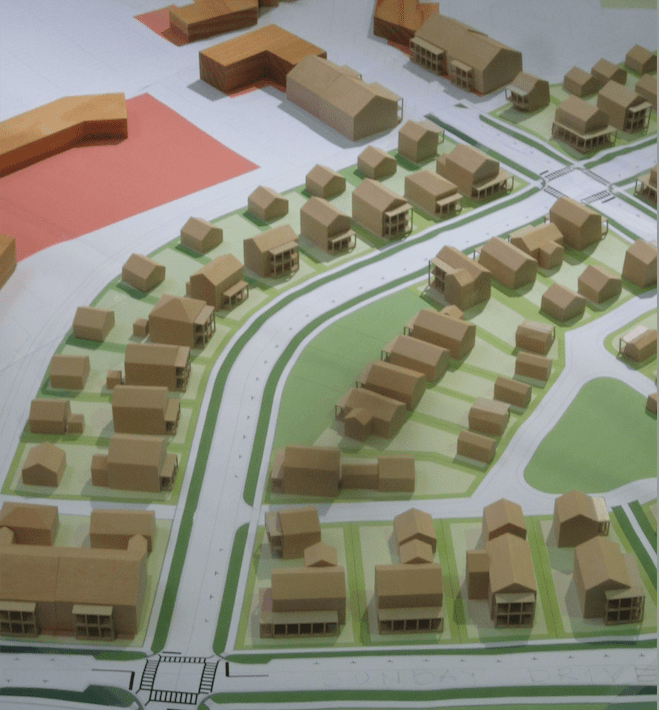
Rather than limiting participation to just the design team, we invited our builder partners and their sales teams to join us. This step proved invaluable for several reasons:
- They gained a deeper understanding of our goals and took ownership of finding solutions.
- They became advocates for some of the more specific community patterns, which might otherwise be seen as restrictive.
- They provided some of the best design ideas—like adding a wrapping porch to the house that served as a bookend to Elbow Park. This adjustment ensured the house related not only to the street but also to the adjacent park, strengthening the overall composition of the neighborhood.
Their frontline perspective and willingness to engage in the process resulted in better, more practical design solutions.
Fostering a Culture of Open Communication:
- Hold Open Forums: Allow all team members to contribute ideas without fear of rejection.
- Encourage Ground-Level Insights: Recognize that frontline employees often have the best understanding of day-to-day realities.
- Recognize & Reward Constructive Input: Highlight contributions from all levels of the organization, not just senior leadership.
- Flatten the Hierarchy When Possible: Ensure decision-making processes incorporate voices beyond traditional top-down structures.
Seeing Through the Illusion
The emperor’s vanity-driven spectacle left him humiliated. In our industries, the lesson is clear: success comes from valuing truth over appearances, questioning assumptions, and empowering those with insights.
- Leaders must actively encourage dissent and honest feedback.
- Design and development should prioritize fundamentals over fleeting trends.
- Stakeholder engagement ensures real needs are met, not just perceived ones.
- Humility in leadership prevents costly overconfidence.
- Organizations that empower all voices—not just the highest-ranking ones—build stronger, more resilient outcomes.
The real visionaries are not those who demand admiration but those who ensure that reality matches the promise. Whether in design, development, or community-building, the courage to speak up and challenge illusions is what ultimately drives long-term success.
 The Barnes Perspective: Thoughts, Ideas & Lessons Learned from Joseph Barnes
Leave a comment