The email subject line reads: “Design Review Comments – See Attached.”
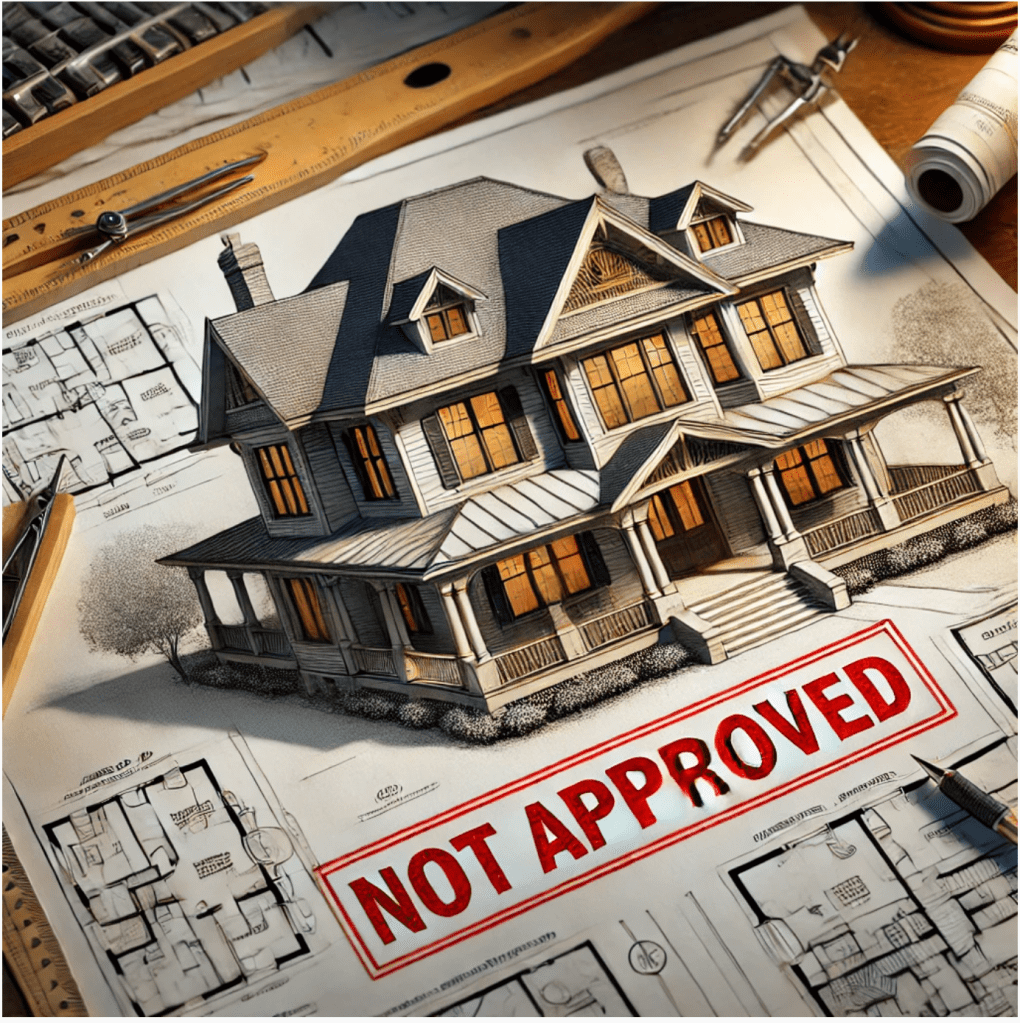
The applicant exhales, already bracing for bad news. They open the file, skim the pages, and immediately see it—red ink everywhere.
Frustration kicks in.
Before even reading the comments, they already know: “NOT APPROVED”
Within minutes, emails start flying. Complaints to real estate agents. Frustrated calls to developers. Some applicants even consider walking away from the project altogether.
And if they decide to push through? They revise, resubmit, and wait.
The process feels endless, like a black hole of bureaucracy. By the time approval finally arrives, the excitement is gone—replaced by resentment.
And it’s not just the applicants.
The reviewers aren’t happy either. They’re frustrated that applicants don’t seem to care about how their buildings contribute to the broader vision. They watch developers prioritize cost-cutting over character.
Nobody wins.
Nobody likes Design Review.
I mean nobody.
So why do we keep doing it?
More importantly—what if we stopped?
The Problem With Design Review
For thirty plus years, I’ve worked on designing and developing new towns and neighborhoods where quality design isn’t optional—it’s everything. I’ve established and/or chaired over a dozen Design Review Boards.
I’ve seen the same problems, over and over:
- Applicants feel like the process is an obstacle, not a resource.
- Reviewers feel like they’re fighting a losing battle for good design.
- Developers just want to keep the project moving forward, avoiding unnecessary delays.
What should be a collaborative process turns into an adversarial one.
That’s a broken system.
But here’s the thing—great design doesn’t come from reviews. It comes from the right team, a clear vision, and an environment where everyone is set up for success.
So instead of reviewing, we should be coaching.
Coaching, Not Reviewing
The best teams don’t succeed because someone critiques their every move. They win because they have a great coach guiding them.
A great coach doesn’t just enforce rules—they:
- Set clear goals.
- Build trust and relationships.
- Provide tools for success.
- Encourage continuous improvement.
That’s exactly how we should approach design.
1. Clarify Goals and Desired Outcomes
Most people aren’t mind readers. Yet too often, we expect architects and developers to just know what we want—only to reject their work after they’ve already put in the effort.
That’s backwards.
How to fix it:
Before the design process even starts, hold an Orientation Meeting. This isn’t just a formality—it’s essential. It’s about developing a relationship, not just have a transaction with someone.
In this meeting, we:
- Define the vision and expectations upfront.
- Establish what success looks like.
- Identify constraints before they become problems.
When everyone starts on the same page, there’s far less need for red ink later.
Ask yourself: As the Developer or Design Reviewer, have you clearly communicated your expectations before the first design submission?
2. Recruit the Right Team
Robert Stern once told me:
“It’s difficult to review in good design. It’s much easier to design in good design.”
Translation? Work with the right people.
Good coaches know this—you can’t win championships with the wrong players.
If you inherit a great team, fantastic. If not, recruit the right people. And if that’s not an option, develop young talent into the kind of professionals who can deliver exceptional work.
Some of my most rewarding experiences have come from mentoring young designers—watching them grow, refine their craft, and produce work that adds long-term value to a project.
Ask yourself: Who’s on your design team? Are they the right fit, or is it time to recruit better talent?
3. Build Relationships of Understanding and Trust
Ever watched a great sports team after a tough game?
Win or lose, the coach and players respect each other. They know they’re working toward the same goal.
Design review should feel the same way.
But too often, it’s a zero-sum game—where every compromise feels like a loss. That’s a recipe for mediocrity.
Trust changes everything. When you understand what motivates the people you’re working with, collaboration gets easier—and the results get better.
Ask yourself: What steps are you taking to build trust between design teams and design review boards?
4. Provide the Right Training, Tools, and Equipment
Great teams don’t win on talent alone. They need the right systems.
Designers need the same.
The best design guidelines don’t just set rules—they inspire. They provide context, explain the why, and offer a framework that leads to better outcomes.
When I worked on Celebration, I reviewed countless design guidelines from other communities. Most read like legal documents—full of restrictions but devoid of inspiration.
That’s a missed opportunity.
People don’t respond to dry checklists. They respond to a clear, compelling vision.
Ask yourself: Do your design guidelines inspire or just regulate?
5. Reward Success and Seek Continuous Improvement
I’ve yet to meet someone who doesn’t appreciate a well-earned “Good job.”
Recognition matters. And it’s free.
A simple call, email, or public acknowledgment can be a game-changer. It builds momentum. It makes people want to push even harder the next time.
At Celebration, I was known for saying:
“This looks great! But… can you ask your architect to make this one small change?”
Sure, it might have been frustrating at times. But in the end, those small changes led to significantly better projects—and more profitable ones.
Good is okay. But good enough should never be okay.
Ask yourself: How do you reward success and encourage continuous improvement in your projects?
A Future Without Design Review
In a perfect world, we wouldn’t need design review boards at all. People would naturally work with skilled professionals, embrace the vision of a community, and build great places.
But we don’t live in a perfect world.
We live in one where time, money, experience, and competing priorities all play a role in what gets designed and built. That means we still need a system to ensure quality and consistency.
But Design Review as it is commonly practiced isn’t that system.
It slows things down. It creates frustration. It fosters resentment, not collaboration.
So, instead of trying to review in good design, we should be coaching it in from the start.
That means:
- Setting clear goals and expectations upfront.
- Working with the right designers.
- Building trust and strong relationships.
- Providing inspirational and practical tools.
- Recognizing and rewarding great work.
When we shift from reviewing to coaching, something incredible happens:
- The process becomes more efficient.
- Projects are stronger and more cohesive.
- Everyone—applicants, designers, developers, and communities—feels more invested in success.
If we want better places, better projects, and a better experience for everyone involved, we have to change the way we do things.
It’s time to stop reviewing and start coaching.
Let’s Keep the Conversation Going
What’s your experience with Design Review? Frustrating? Productive? A necessary evil?
If you’ve worked in this system—on either side—I’d love to hear your thoughts.
Drop a comment, send me a message, or let’s grab a coffee and talk about how we can make the process better for everyone.
 The Barnes Perspective: Thoughts, Ideas & Lessons Learned from Joseph Barnes
Leave a comment