I was sitting in my office at Celebration, Florida’s Town Hall, designed by Philip Johnson, reviewing design submittals when I heard Brad, the Community Manager, exclaim from across the hall, “Hey, Joe. I just got one of the strangest phone calls I’ve ever had. By any chance, do the Andersons live in a Victorian house?”
A quick check of my records confirmed that, yes, not only did they live in a Victorian home—it was one of the most elaborate, gingerbready Victorians in all of Celebration. Upon hearing this, Brad let out a knowing laugh. “I knew it. Those Victorian people can be a real handful.”
Now, I’m not here to make broad generalizations (and yes, names have been changed to protect both the innocent and the guilty). But I will say this: over the years, I’ve noticed a striking pattern. A person’s personality and character often align with their preferred architectural style. Not always—there are exceptions—but more often than not, the home we choose says something about us. Architecture is a language, and it tells a story about who we are, what we value, and how we see the world.
Architecture as Language: A Reflection of Identity, Aspiration, and Legacy
Architecture is more than just the design and construction of buildings; it is a language—a powerful means of communication that conveys messages about identity, values, aspirations, and even the trajectory of a society. Whether it is the choice of materials, the spatial organization, or the stylistic references, every architectural expression tells a story about how a person, an entity, or an entire civilization perceives itself and how it wishes to be perceived by others. Architecture speaks across time, serving as both a reflection of the past and a prophecy for the future.
The United States: Classical Architecture as a Political Statement
When the United States was founded, its leaders consciously looked to the architectural language of ancient Greece and Rome to articulate the ideals upon which the nation was built. The Founding Fathers sought to establish a government rooted in democracy, order, and civic virtue, and they found architectural inspiration in the classical traditions of antiquity.

By adopting classical architecture, the United States signaled its legitimacy to the world, communicating that this fledgling nation was built on enduring principles, stability, and a respect for history while also looking toward the future.
Saudi Arabia’s Vision 2030: A New Architectural Language for a New Era
Just as early America used classical architecture to define its national identity, modern Saudi Arabia is forging a new architectural language as part of Vision 2030, Crown Prince Mohammed bin Salman’s ambitious initiative to transform the Kingdom. The challenge for architects and planners involved in giga-projects such as Qiddiya, NEOM, and Trojena is to create an architectural expression that is rooted in Saudi heritage yet embodies the country’s future ambitions.
The task is to balance legacy and prophecy—to honor the past while projecting a bold vision of innovation, progress, and global leadership. As expressed by Pritzker Architecture Prize winning Architect Jean Nouvel when asked about the design character for a resort he was designing a Alula, a cultural oasis in northwest Saudi Arabia,
“I wanted to go back to the very soul of the land, to rediscover its essence and create a dialogue between past and future.”

As Saudi Arabia continues to push the boundaries of architecture with Vision 2030, it is creating not just buildings, but a statement to the world—a declaration that it is no longer just a steward of oil wealth, but a hub of innovation, culture, and global leadership. This new architectural language, much like that of the early United States, will define the country for generations to come.
Celebration, Florida’s Architectural Languages
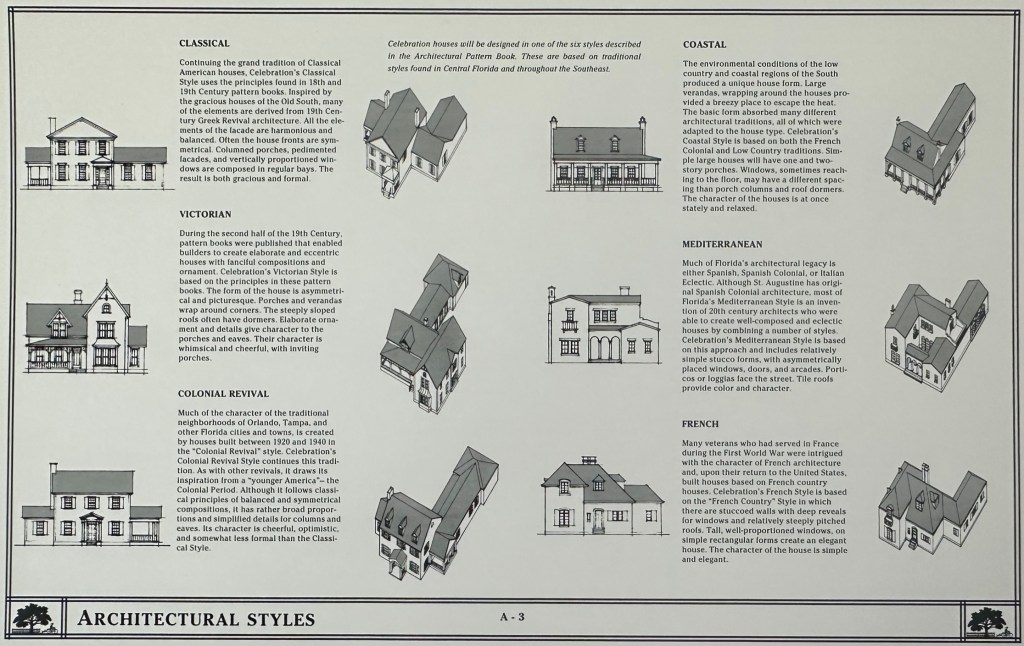
At Celebration we had six primary architectural styles or languages for the residential components of the town. These were based on the traditional styles found in Central Florida and throughout the Southeastern United states. The six architectural styles included Classical, Colonial Revival, Coastal, Mediterranean, French and Victorian.
Classical – Style and Personalities
Celebration’s Classical Style stands as a testament to balance, proportion, and timeless elegance. Rooted in 19th-century Greek Revival architecture, these homes are defined by their symmetrical façades, columned porches, and precisely spaced, vertically proportioned windows. Every element is carefully considered, creating an aura of refinement and order—a physical manifestation of the principles found in classical design pattern books.
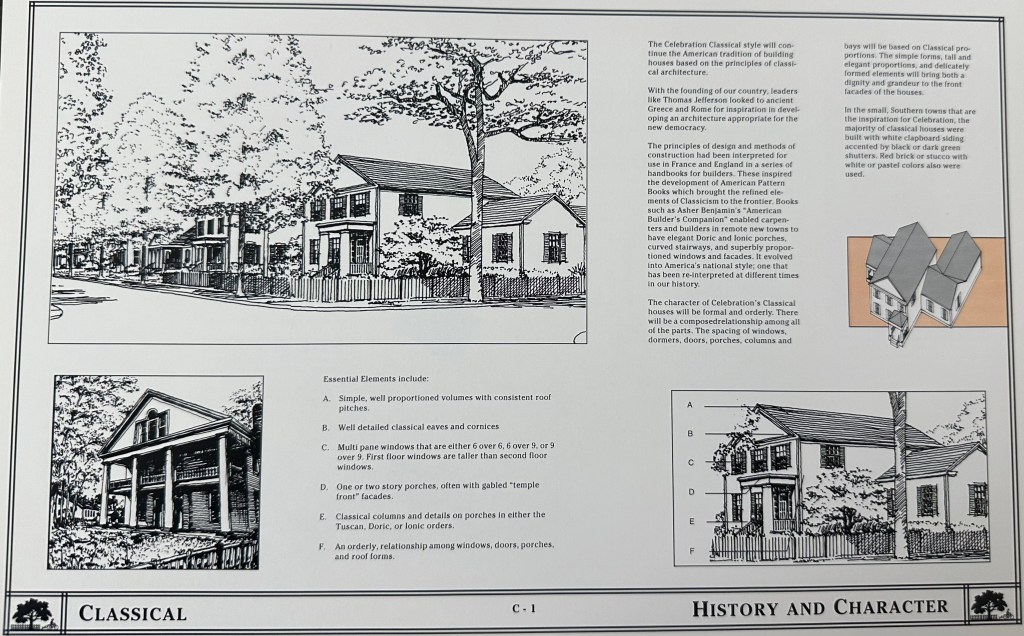
The residents who gravitate toward Celebration’s Classical homes tend to embody these same qualities. They are structured, disciplined, and methodical—individuals who appreciate rules, traditions, and the enduring power of well-established systems. Much like the carefully arranged elements of their home’s exterior, they take comfort in a world that is well-organized and logically composed. To them, spontaneity is best when planned in advance.
While their nature may come across as reserved or even a touch standoffish at first, it’s not from a lack of warmth—it’s simply a preference for thoughtful interactions over casual chatter. These homeowners are the ones who ensure the HOA meetings run efficiently, who remember the proper etiquette for every occasion, and who, in their own way, serve as quiet anchors of the community. They are the keepers of tradition, the organizers of black-tie neighborhood galas, and the ones who, if they invite you to a dinner party, will have the table impeccably set with fine china, crystal glasses, and a seating arrangement that encourages exactly the right kind of conversation.
Their homes are as meticulously maintained as their calendars—no clutter, no chaos, just a carefully curated sense of timeless beauty. They appreciate a well-manicured lawn, a properly proportioned cornice, and the soothing predictability of classic architectural symmetry. If there’s a library in their home, you can be sure the books are not only alphabetized but possibly cataloged.
But while they may have a reputation for being buttoned-up, those who take the time to get to know them will discover an understated charm. Beneath the composed exterior lies a subtle wit, an appreciation for dry humor, and a deep respect for intellectual conversation. And while they may not be the first to host a raucous neighborhood gathering, when they do entertain, it is done with absolute grace—candles lit, music at the perfect volume, and a menu that subtly nods to classical influences.
Just like their stately columned porches, these residents are, quite literally, pillars of the community—steadfast, reliable, and undeniably polished. Their sense of order and structure isn’t about rigidity; it’s about creating a life, and a home, where everything has its rightful place, just as it should be.
Colonial Revival – Style and Personalities
Celebration’s Colonial Revival Style embodies the enduring spirit of early American neighborhoods—welcoming, familiar, and steeped in tradition. Unlike the more rigid formality of Classical homes, Colonial Revival houses maintain a sense of balance and symmetry but with broader proportions and simplified architectural details. They exude an effortless charm—cheerful, optimistic, and unpretentious, much like the people who call them home.
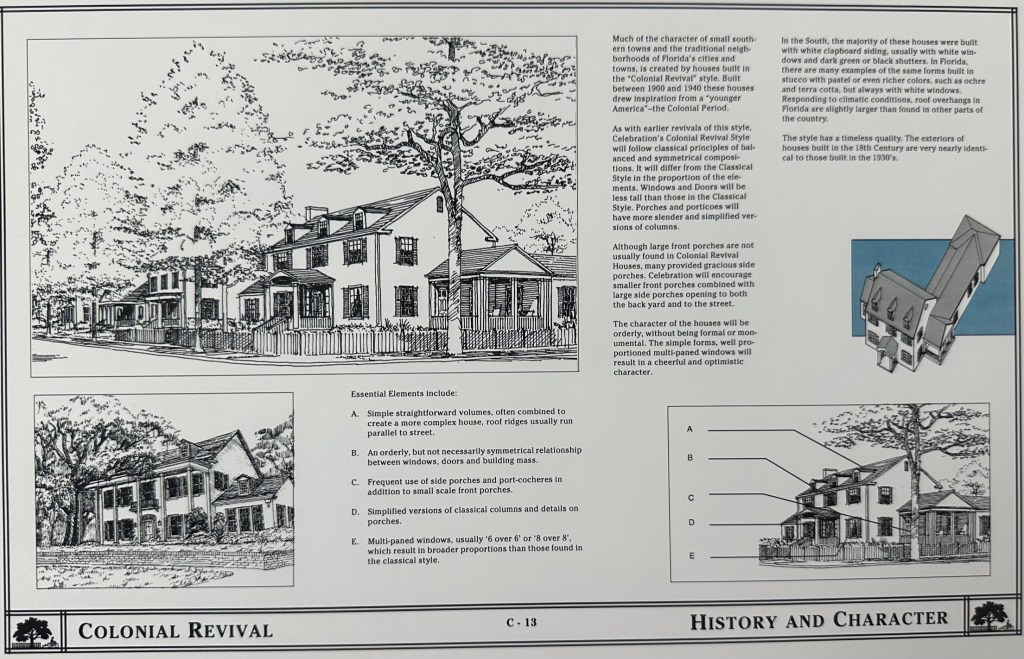
The residents who gravitate toward these homes are the heart and soul of the community. They are the ones who instinctively step up, whether it’s organizing a Fourth of July parade, leading a Scout troop, or coaching the neighborhood’s youth soccer team. There is an innate sense of duty and service in them—not because they seek recognition, but because they genuinely enjoy being part of something bigger than themselves.
Their homes reflect this same welcoming nature. Colonial Revival houses often become the neighborhood gathering places—the ones where kids instinctively stop after school, where bikes pile up in the driveway, and where an extra plate is always set at the dinner table “just in case.” These homes are warm and lived-in, not in a careless way, but in a way that speaks of memories made—dog-eared cookbooks on the counter, hand-me-down quilts on the couch, and a front door that never seems to stay locked.
The owners of these homes value traditions but aren’t necessarily tied to rigid rules. They might have a Thanksgiving table set with heirloom china, but they won’t blink if someone shows up in jeans. They love the nostalgia of old-fashioned holidays, neighborhood potlucks, and school plays, but they also embrace a certain easygoing flexibility—because, at the end of the day, what matters most is the people, not the perfection.
While they may not be as exacting as their Classical neighbors or as artistically inclined as their French or Mediterranean counterparts, their strength lies in their unwavering sense of community. They are the ones who check in on elderly neighbors, who lend a hand before being asked, and who believe that a good front porch conversation can solve just about anything.
These are the homes where lifelong friendships are forged, where the screen door is always swinging, and where there’s always a pitcher of something cold in the fridge. They are not just houses—they are the cornerstone of the neighborhood, the places where stories begin and where, no matter how far one may roam, there’s always a sense of home to come back to.
Coastal – Style and Personalities
Celebration’s Coastal Style is rooted in the architectural traditions of the Southern low country, where homes were designed as a response to both the elements and a way of life centered around hospitality and ease. These houses, with their wide porches, deep overhangs, and breezy, open interiors, are as much about embracing the outdoors as they are about providing a cool, comfortable retreat from the heat. With influences from both French Colonial and Lowcountry vernacular, these homes strike a perfect balance between stately presence and casual charm.
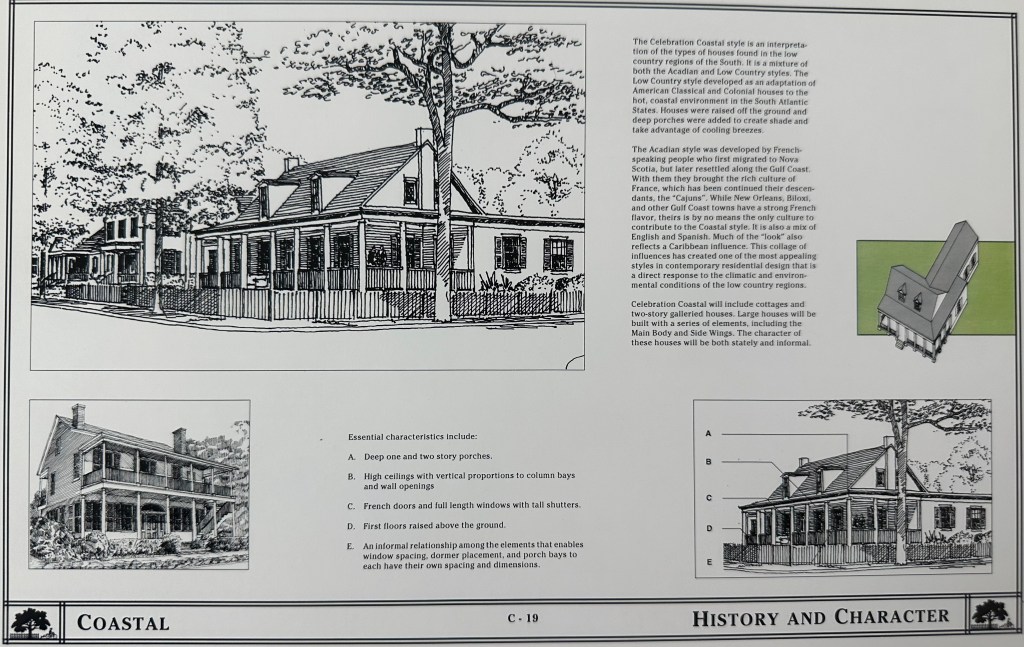
The people who are drawn to these homes share a similar duality—they exude a certain grace and composure, yet they are as approachable as an old friend. They are the kind of people who always seem to have a cold drink in hand, a rocking chair waiting, and a story to tell. Their porches aren’t just architectural features; they’re extensions of their personalities—open, inviting, and always filled with laughter, whether from neighbors stopping by, family gathering for a lazy afternoon, or an impromptu cocktail hour that turns into a full-fledged party.
These homeowners are natural hosts, though they never make a fuss about it. Unlike the carefully curated dinner parties of the French buyer or the perfectly planned gatherings of the Classical homeowner, the Coastal homeowner’s get-togethers are wonderfully unplanned. Guests are as likely to be offered a glass of bourbon in a well-worn tumbler as they are to be handed a local craft beer straight from the cooler. They don’t believe in pretense—just in good company, good conversation, and the kind of relaxed enjoyment that makes people want to stay a little longer.
Their homes reflect this easygoing, welcoming nature. Furniture is chosen for comfort, not just for style, and everything has a touch of weathered charm—as if it has seen a few too many sun-soaked afternoons but is all the better for it. The interiors are filled with natural light, doors are often left open to let the breeze roll through, and there’s an unspoken rule that shoes are entirely optional.
To live in a Celebration Coastal home is to understand the art of slowing down. It’s about knowing that some of the best moments in life happen on a front porch, where time stretches out with the setting sun and conversations are never rushed. It’s about embracing a way of life that is equal parts dignified and laid-back, where formality is left at the door but warmth and graciousness are in endless supply.
And for those who don’t yet know the Coastal homeowner, well—it won’t stay that way for long. Because in their world, a simple hello from the sidewalk often turns into a rocking chair invitation, a glass raised in welcome, and another friendship formed beneath the gentle hum of a porch ceiling fan.
Mediterranean – Style and Personalities
Celebration’s Mediterranean Style embodies a love for the sun-drenched landscapes and eclectic architecture of Europe’s coastal regions. Unlike the more rigid and balanced styles of Colonial Revival, these homes embrace an easy, flowing asymmetry—stucco walls, arched doorways, and wrought-iron details giving them a sense of timeless romance. They are at once grand yet welcoming, refined yet effortlessly relaxed.
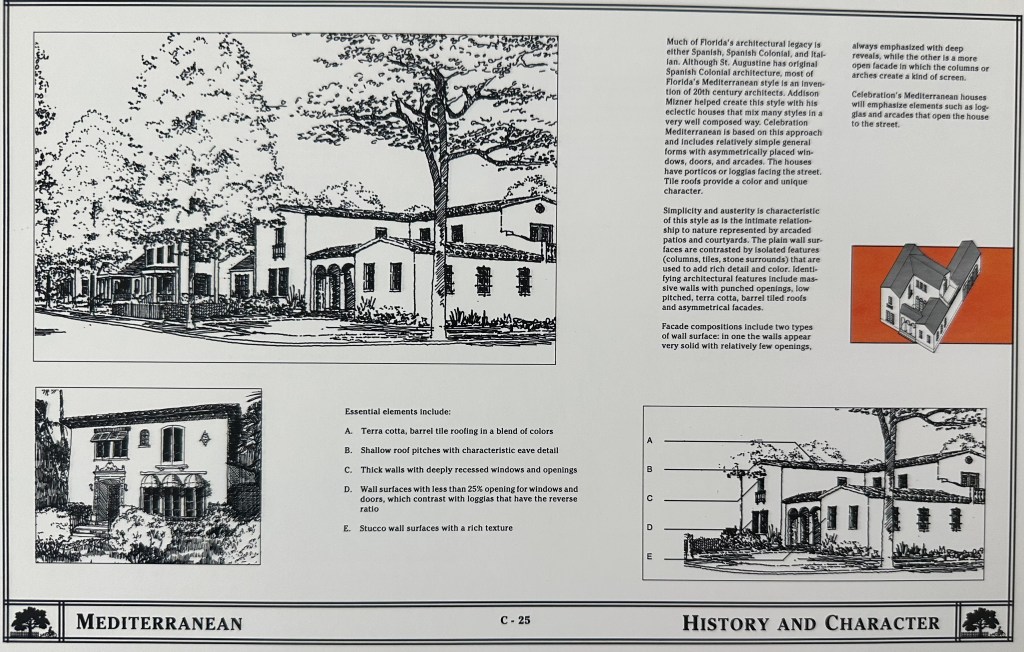
The people who gravitate toward Celebration’s Mediterranean-style homes tend to be just as dynamic. They’re world travelers—people who collect experiences like others collect antiques, always bringing a bit of that last adventure into their homes. Their houses are filled with color, texture, and an unexpected whimsy—perhaps a hand-painted tile backsplash they discovered in a small Spanish village, or an ornate chandelier repurposed from a historic Italian villa.
Their personalities? Spicy. They are the ones who throw the best dinner parties, where the wine flows as freely as the laughter. They have an innate ability to make any gathering feel like a scene from a lively European café—effortlessly charming, warm, and just a little unpredictable. Their friends never quite know if they’ll be greeted with homemade paella or an impromptu flamenco performance in the courtyard.
These residents aren’t necessarily the PTA presidents or the scout leaders, but they are the ones who convince everyone to book last-minute tickets to a wine festival or turn an ordinary Tuesday night into a celebration. Their homes, much like their personalities, are a vibrant mix of old-world elegance and modern flair—a little bit dramatic, always inviting, and forever full of life.
French – Style and Personalities
Celebration’s French Style is rooted in a deep appreciation for Old World elegance, inspired by the charming and enduring homes of the French countryside. With their stucco walls, deeply recessed windows, and steeply pitched roofs, these houses exude a quiet sophistication—unassuming yet undeniably graceful. Their balanced but asymmetrical compositions create a sense of refinement that is at once structured and organic, as if they have stood the test of time, effortlessly blending beauty and function.
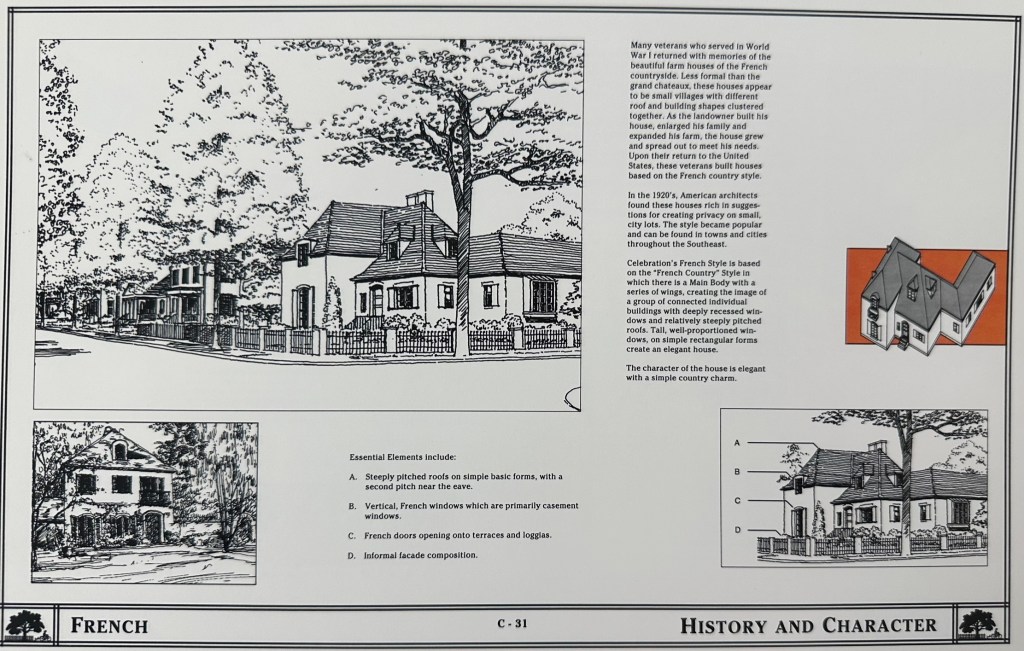
The residents who are drawn to these homes embody an interesting fusion of characteristics. They share the Mediterranean buyer’s appreciation for history, artistry, and a touch of drama—perhaps an antique chandelier in the foyer or a dining table that has hosted more than one multi-course, wine-filled evening. But they also carry the relaxed, welcoming nature of the Coastal buyer. They are the kind of people who will greet you with a firm handshake or a warm hug, then insist you stay a while, often with a glass of Bordeaux or a perfectly crafted cocktail in hand.
Conversations with them tend to be lively yet thoughtful — ranging from the merits of a well-aged cheese to the latest neighborhood happenings. Their homes reflect this mix, effortlessly blending refined taste with lived-in comfort. The grand fireplace might be adorned with vintage French pottery, but there’s just as likely to be a well-loved armchair where friends and family gather for long, unhurried conversations.
These residents aren’t necessarily throwing spontaneous parties like their Mediterranean counterparts, nor are they quite as front-porch social as their Coastal neighbors. Instead, they create an air of quiet sophistication—hosting intimate gatherings where the food is as carefully curated as the guest list. They value deep relationships and meaningful moments, preferring the glow of candlelight on a farmhouse table to the bustle of a crowded affair.
To know a Celebration French homeowner is to be part of something effortlessly elegant yet warmly familiar. Their doors are always open, their kitchens always stocked, and their conversations—much like their homes—are a perfect blend of charm, wit, and timeless hospitality.
Victorian – Style and Personalities
Celebration’s Victorian Style is a love letter to the elaborate, eccentric, and wildly imaginative homes of the late 19th century. Inspired by the era’s pattern books, these houses embrace asymmetry and whimsy—steeply pitched roofs, ornate trim, and playful detailing that seem plucked from a fairy tale. Their porches wrap around corners as if inviting both breezes and impromptu conversations, while decorative brackets, spindle work, and fish-scale shingles add to their undeniable charm. These homes do not whisper; they sing—bright, cheerful, and unapologetically expressive.
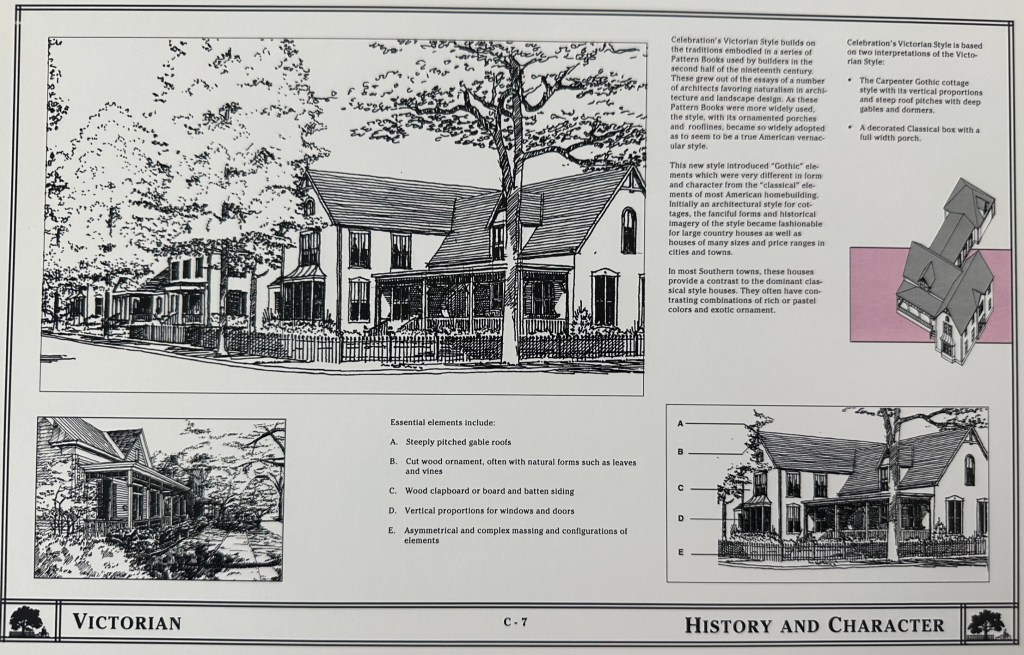
The people drawn to Victorian homes are, without a doubt, an interesting bunch. One might say a bit peculiar. Not content with mere function, they revel in flair, obsessing over details others might never even notice. The more elaborate and fanciful the design, the higher the likelihood that the homeowner is delightfully—and sometimes maddeningly—particular. To them, a home is not simply a place to live; it is a canvas for personal expression, a testament to creativity, and, at times, a stage set for a life lived in technicolor.
These homeowners are not ones for simplicity. Where others might be satisfied with a muted, neutral color scheme, the Victorian homeowner dreams in jewel tones and pastels, sometimes both at once. There was one Victorian homeowner who proposed a blue shingle roof for his home. When asked what the precedent was for this design choices, he referenced Cinderella Castle, the center piece of the Magic Kingdom has a blue roof. Don’t worry the blue shingled roof was not approved.
Design decisions are not merely choices; they are grand declarations. This tendency for the unexpected made them notoriously difficult clients during the building process—so much so that some of Celebration’s builders outright refused to work on their homes. One could argue that they got so lost in the minute details—the perfect spindle design, the exact shade of a gingerbread trim—that they occasionally forgot about the bigger picture. But to them, the details were the picture.
Once settled in the neighborhood, they remained, shall we say, distinct. Not necessarily the easiest of neighbors, but certainly the most memorable. They were the ones known for hosting Halloween displays so elaborate they rivaled theme park productions, or Christmas light shows synchronized to orchestral music. Their porches, brimming with intricate railings and painted in delightful contrast to the rest of the house, became gathering places for spirited conversations, afternoon teas, and perhaps even the occasional séance—purely for historical appreciation, of course.
But for all their quirks, Victorian homeowners bring a vibrancy to Celebration that no other architectural style can match. They are the dreamers, the romantics, the ones who see the world as it could be rather than as it is. They are both nostalgic and fantastical, weaving stories into the very fabric of their homes. Their houses may be picturesque and cheerful, but their personalities? Positively theatrical.
The Power of Architecture as a Communicator
Architecture is more than a shelter or a stylistic choice—it is a form of self-expression, a silent yet powerful storyteller that reveals how we see ourselves and how we want to be seen. Whether consciously or not, the homes we gravitate toward reflect our values, aspirations, and personal histories.
Just as nations use architecture to project identity—like the United States adopting Classical architecture to embody order and democracy or Saudi Arabia crafting a bold new architectural language for its future—individuals do the same on a personal scale. A stately French home may signal an appreciation for refinement and curated experiences, while a Mediterranean retreat may suggest a free-spirited nature and love for spontaneous gatherings. The choices we make, from the symmetry of a façade to the materials we favor, communicate something deeper than aesthetics alone.
Of course, these correlations are not absolute—there will always be the unexpected pairing of personality and place. Yet, patterns emerge because architecture is, at its core, deeply human. It is both a reflection of who we are and a blueprint for who we aspire to become.
So take a look at your home, your surroundings, the places that inspire you. What is your architecture saying? And more importantly—does it speak in your voice?
One more word of advice: Beware of the Victorians. 😉
 The Barnes Perspective: Thoughts, Ideas & Lessons Learned from Joseph Barnes
Leave a comment