Category: Real Estate
-
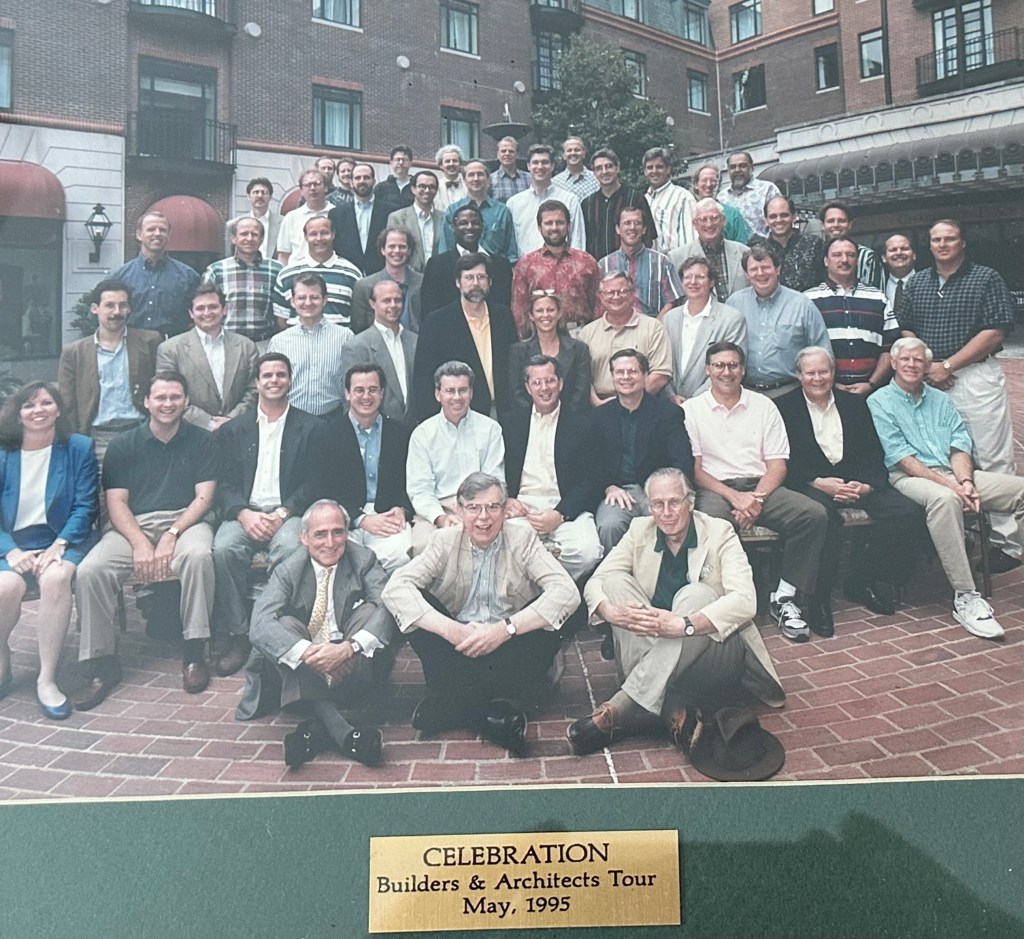
Celebration’s success wasn’t an accident. It was the product of a deliberate process built on three steps: Educate, Inspire, and Collaborate. From hand-picking builders willing to take risks, to immersive workshops and precedent tours, to pairing production builders with top architects, this is the story of how those strategies turned a vision into an award-winning…
-

Real estate development requires a strategic phasing approach to effectively manage expectations and guide execution. A clear plan helps stakeholders understand what to expect, ensuring focused resource allocation and priority setting. Successful large-scale projects, like Celebration and I’On, demonstrate the importance of delivering compelling phases that create self-sufficient neighborhoods early on. By integrating residential, civic,…
-

This article emphasizes the importance of a well-structured budgeting process in development projects. It highlights the distinction between budgets and cost estimates, advocating for early budget establishment to align financial goals with design aspirations. It details top-down and bottom-up budgeting methods, underscores the need for contingencies, and advises thorough documentation for accountability. By blending project…
-

This article makes the case for clearly defined programmatic requirements in real estate projects. To develop an effective design brief, you need to detail both operational functions and component specifications. The Qiddiya Arena is used as a case study to show how well-planned spaces and clearly stated relationships between them are critical. Early definition of…
-
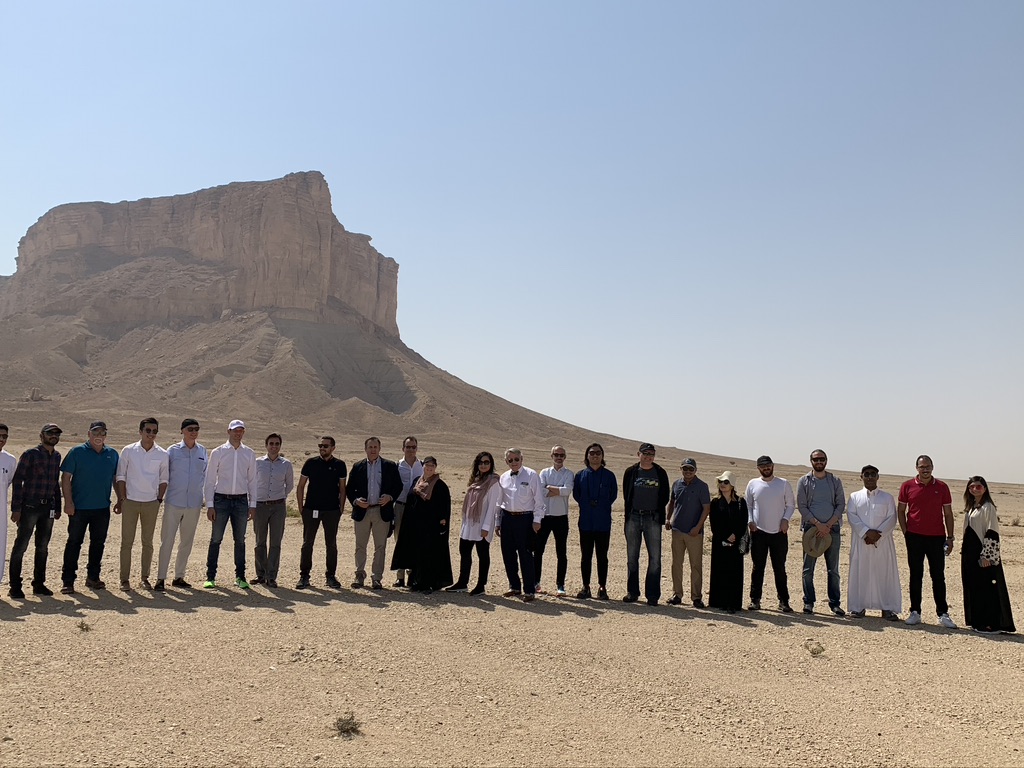
The shift from Strategic Definition to Design Brief involves transitioning from internal alignment among key stakeholders to providing clarity for an external design team. The Project Overview communicates the project’s vision, goals, and strategic context, while the Site Context details the site specifics, including its characteristics, constraints, and opportunities. Using the Qiddiya project as an…
-

The Design Brief is a crucial document that transforms a project’s vision into actionable guidelines, facilitating alignment among architects, planners, and stakeholders. It defines scope, goals, and constraints, ensuring clarity in complex developments. A well-structured brief promotes effective decision-making while allowing room for adaptation during the design process.
-

It usually starts with a sketch. A hand-drawn map. A rough massing model. A few bullet points on a whiteboard. Someone says, “This could be something.” But between that first idea and a real, permitted, financed, and viable project lies a long stretch of decisions and dependencies that too often get overlooked. That’s where the…
-

The article discusses the importance of early-stage proforma analysis in real estate development projects. Despite the promising 500-acre site, the initial financial metrics indicated that the project did not meet necessary risk thresholds. The back-of-the-envelope analysis, focusing on costs, revenues, and market assumptions, highlighted that the concept needed adjustments. Key metrics like IRR, equity multiples,…
-

This article discusses the importance of thorough site analysis and due diligence in land development projects, illustrating this with examples like Bundoran Farm and Boar’s Head. The author emphasizes that not all land is suitable for development, and initial excitement can lead to misconceptions. Engaging intimately with the land, understanding its features, and involving local…
-
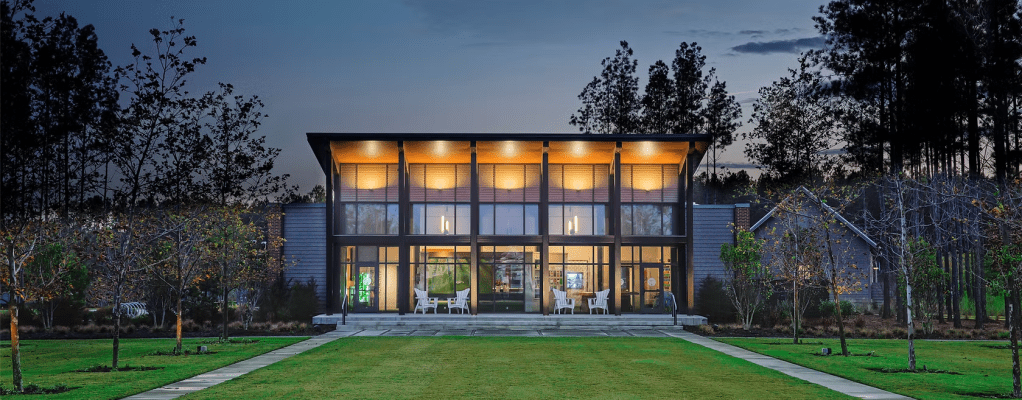
Too many developments are shaped by what worked yesterday—ignoring overlooked buyers and blending into sameness. But real value is created by listening forward: using rigorous market research not just to validate plans, but to uncover unmet needs and design for those the market typically misses. When strategy is rooted in insight, communities don’t just fill…

