The executioner’s blade gleamed in the morning sun. The gathered townspeople whispered, their eyes fixed on the condemned man. The magistrate had spoken—this man must die for his crime. The blade swung down… and shattered on his neck as if striking solid steel.

The magistrate, baffled but undeterred, ordered a new execution method for the next day. But when they tried to drown him, he would not sink. When they burned him, the flames did no harm. When they buried him alive, he simply did not breathe. No matter what punishment they devised, he survived.
By the end of the week, the authorities had no choice but to release him. What they never realized was that it hadn’t been just one man—it had been five.
Each night before the execution, one brother secretly swapped places with another, using his unique ability to survive:
- The first brother could swallow the sea.
- The second brother had an unbreakable iron neck.
- The third brother could stretch his legs infinitely.
- The fourth brother was fireproof.
- The fifth brother could hold his breath indefinitely.
By leveraging their individual strengths, the brothers outmaneuvered their captors, proving that intelligence and adaptability triumph over brute force.
The Five Chinese Brothers written by Claire Huchet Bishop and illustrated by Kurt Wiese, is a retelling of a centuries old Chinese folk tale, the Ten Brothers. While written nearly a century ago, the books lessons are surprisingly relevant—especially in design management, community development, and real estate development, where problem-solving, strategy, and resilience determine success.
Lessons from the Five Chinese Brothers
The brothers’ survival wasn’t about fighting harder—it was about fighting smarter. Here are five key takeaways from their story and how they apply to modern professionals.
1.Leverage Individual Strengths for Collective Success
Each brother had a unique ability, but alone, none could have escaped. Their success depended on recognizing when to step forward and when to step back.
Application: In real estate development, no single person can simultaneously oversee architecture, finance, legal matters, and construction. The most successful firms thrive by aligning the right talent to the right task—whether that means engaging an environmental consultant for sustainable design, a market analyst to refine a sales strategy, or a legal expert to navigate complex entitlements.
While generalists play a critical role in keeping projects moving forward, ensuring coordination across disciplines, and maintaining a broad strategic vision, the inclusion of specialists is equally essential. Specialists bring deep expertise, experience, and nuanced problem-solving abilities that can elevate a project beyond what a generalist alone could achieve. Their insights can lead to cost savings, risk mitigation, and innovative solutions that might otherwise be overlooked.
Striking the right balance between generalists and specialists allows a team to be both adaptable and precise—ensuring that big-picture objectives are met while leveraging specialized knowledge to navigate complex challenges effectively.
2. Adapt When the Rules Change
Each night, the brothers anticipated the magistrate’s next move and adjusted their strategy accordingly. They never fought the system head-on; they worked around it.
Application: In community development, unexpected zoning restrictions or public opposition can stall a project. A rigid, uncompromising approach often leads to failure, while a flexible strategy—such as adjusting project features to align with community concerns—can pave the way for approval. Adaptability is often the deciding factor between progress and rejection.
However, it’s crucial to strike a balance. While compromise can be a powerful tool for overcoming resistance, giving up too much can dilute a project’s vision, undermine its financial viability, or create long-term challenges. Knowing where to adjust and where to stand firm is essential.
As my mom used to say, “It’s okay to be open-minded, but not so open-minded that your brain falls out.”
This wisdom applies directly to development—being receptive to feedback and willing to adapt is important, but a successful developer must also recognize when to hold the line to preserve the integrity and success of a project.
3. Outmaneuver Problems Instead of Confronting Them Directly
The brothers never argued their innocence; they demonstrated their invincibility. Instead of resisting execution, they rendered it impossible.
Application: In design management, when budgets are cut mid-project, the best response isn’t to fight for more funding—it’s to redesign smarter. By using alternative materials, simplifying construction methods, or refining the scope, designers can still achieve exceptional results within new constraints.

While working on Nexton in Summerville, South Carolina, we faced the challenge of delivering high-quality architectural design in what was then a moderately priced housing market. To navigate this, we collaborated closely with homebuilders to understand their constraints—both financial and operational. Together, we developed design strategies and selected construction methods and materials that enabled the creation of visually appealing homes while staying within budget.
The result was a thriving community that not only won numerous regional and national design awards but also became one of the best-selling master-planned communities in the United States.
4. Perseverance Leads to Victory
The magistrate tried five different executions, but the brothers endured until the system itself conceded. Their perseverance, rather than brute strength, ultimately won their freedom.
Application: In real estate development, navigating land acquisition, financing, and regulatory approvals can take years. The most successful developers aren’t necessarily those with the most resources but those who persist through setbacks—adapting their approach while staying true to their vision.

This was exemplified in the development of I’On in Mount Pleasant, South Carolina. Thanks to the perseverance of the Graham family (Tom, Vince, and Geoff), The I’On Company was able to create one of the finest communities in South Carolina and, arguably, the United States. To honor this dedication, we named one of the streets in I’On “Perseverance.”
5. Creativity is a Competitive Advantage
The brothers didn’t resist in predictable ways—they used intelligence and unconventional tactics to escape. They thought beyond the obvious, which is often the key to success.
Application: In real estate, environmental concerns can derail a project. Instead of forcing a development through, innovative developers integrate nature into the design—elevating buildings on stilts, using reclaimed materials, or incorporating eco-tourism experiences. By thinking differently, obstacles become opportunities.
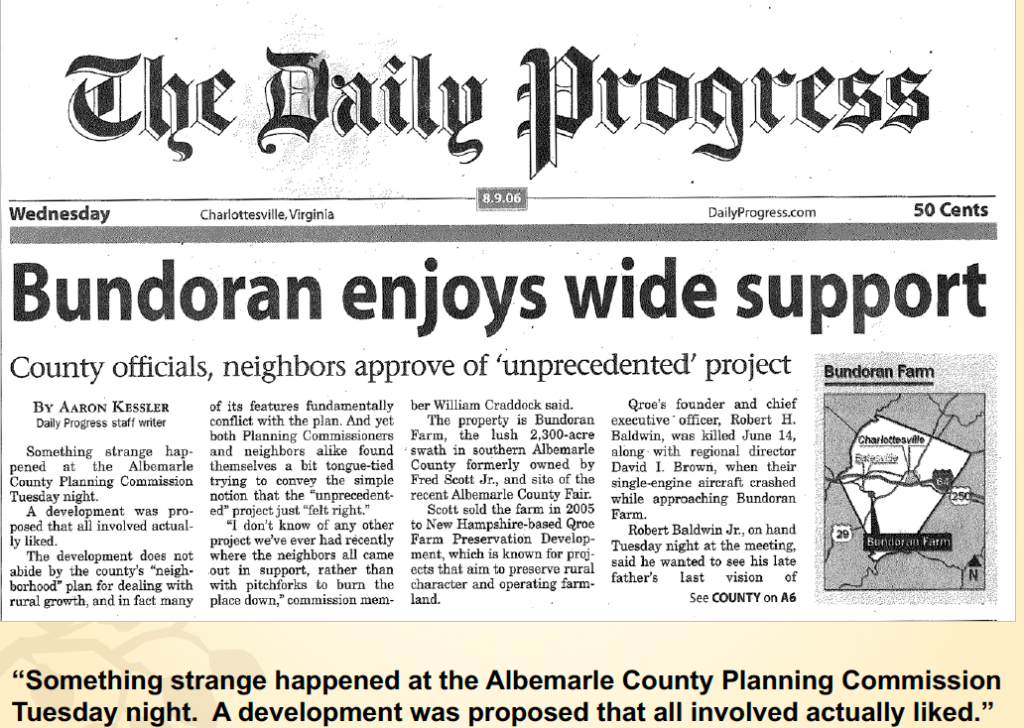
At Bundoran Farm in Albemarle County, Virginia—an area known for its challenging entitlement process—we worked closely with environmental groups and the agricultural community to develop a land-use strategy that not only significantly increased the property’s value but also addressed the concerns of these critical stakeholders.
This was achieved through a master plan that introduced a series of farm belt and greenbelt easements, protecting the property’s agrarian character while preserving a substantial portion of its agricultural and silvicultural activities.
Perhaps my favorite newspaper article of all time was published the day after our public hearing with the Albemarle County Planning Commission. The Daily Progress ran the headline: “Bundoran Enjoys Wide Support,” with an opening line that read: “Something strange happened at the Albemarle County Planning Commission Tuesday night. A development was proposed that all involved actually liked.”
The Final Escape: A Lesson for Professionals
The Five Chinese Brothers didn’t win by force or luck. They won by:
- Understanding strengths and using them strategically.
- Adapting to challenges instead of resisting them.
- Thinking beyond conventional solutions.
- Persisting even when success seemed impossible.
- Leveraging creativity as their ultimate advantage.
In business, leadership, and development, those who outthink their challenges—not just outwork them—are the ones who thrive.
So, next time you’re facing a complex problem, ask yourself: Are you pushing against the obstacle, or are you stepping back and finding a smarter way through?

 The Barnes Perspective: Thoughts, Ideas & Lessons Learned from Joseph Barnes
Leave a comment