I’ve had the opportunity to help shape two very different communities—Celebration, Florida and Bundoran Farm in Albemarle County Virginia. Both taught me something fundamental: when a team is aligned around a clear vision, everything else works better. The design is more coherent. The decisions come easier. The outcomes are more meaningful and lasting.
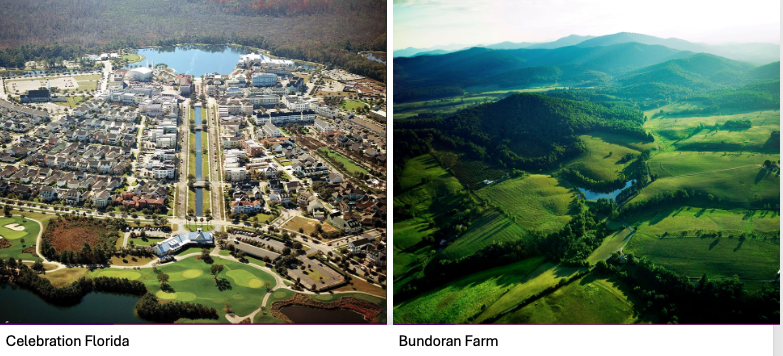
Establishing a project’s vision, purpose, and goals isn’t just good practice—it’s the critical first step in developing a project’s Strategic Definition. Before you ever talk about massing, phasing, or financing, you need to be absolutely clear on what you’re trying to create and why it should exist. Without that strategic definition in place, the rest of the work—no matter how technically sound—risks becoming misaligned or irrelevant.
Here’s what I’ve learned about how to get that clarity early, and why it matters so much.
We all bring our own lens to a project.
Some see a site’s constraints. Others see its potential.
Some focus on feasibility. Others on feeling.
That’s the value of a strong, multidisciplinary team—different minds solving the same problem from different angles. But without a shared understanding of the project’s vision, purpose, and goals, those different perspectives can clash. Even highly skilled professionals can unintentionally slow a project down or steer it off course—not because they lack expertise, but because they weren’t clear on what we’re really trying to build.
I’ve seen this play out more than once. And I’ve also seen what happens when a team is truly aligned from day one. When everyone is grounded in a clear, articulated vision, things move faster, decisions make more sense, and the end result is often far more meaningful than any one person could have imagined alone.
That lesson was reinforced during my work on two very different but equally ambitious communities: Celebration, Florida and Bundoran Farm in Virginia.
Celebration, Florida – The American Town Memo
In the early stages of what would become Celebration, I was fortunate to work closely with an extraordinary team assembled by Disney. The concept was sparked by a pair of internal memos—titled The American Town—written by Peter Rummell, then President of Disney Development Company, to Michael Eisner, CEO of The Walt Disney Company. These memos weren’t design briefs or planning documents. They were something rarer: a bold articulation of purpose.
The idea was to build a town, not a theme park. A real, functioning place that could reflect and reinterpret American ideals of community, walkability, education, and innovation. The memos framed Celebration as a “living laboratory” for new town development—a place where ideas could be tested, refined, and hopefully replicated. They called for timeless architecture, strong public spaces, integrated technology, and efficient services. The goal was to make life simpler, more connected, and maybe even a little bit magical—not through fantasy, but through thoughtful planning.
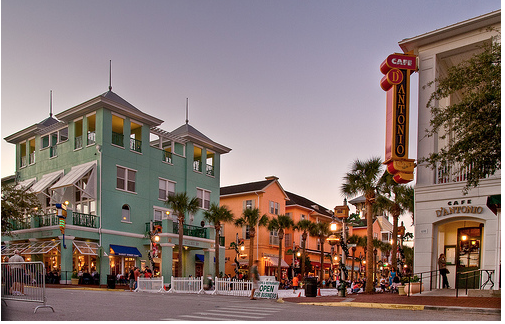
I was part of the team that helped bring that early vision to life. That meant translating broad goals into real choices—site plans, architectural guidelines, partnerships, public realm design, operations strategies. The clarity of Rummell’s vision allowed the broader team to build with purpose. We didn’t have to guess. We could point to a foundational idea and say: This is who we are. This is what we’re building toward.
That kind of clarity is invaluable, especially when the stakes are high and the project is complex.
Bundoran Farm – Storyline – “a way of life on a land that works”
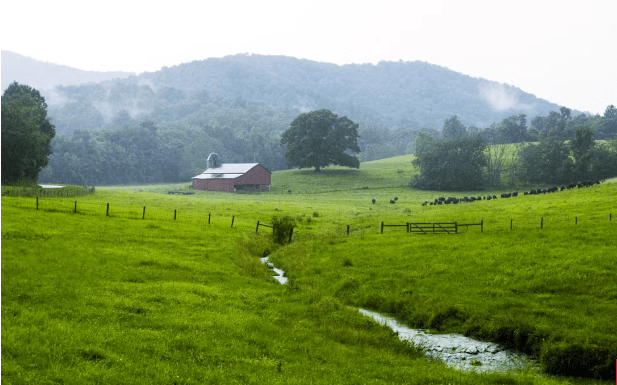
Years later, I found myself helping shape a very different kind of place—Bundoran Farm, a 2,300-acre property in Albemarle County, Virginia. The goal was to create an environmentally responsible residential community built on a working farm. But unlike Celebration, the vision didn’t start with a single memo—it emerged from a collective process.
Over several days, we brought together an unlikely group: architects, conservationists, neighbors, agricultural experts, even writers and activists. We asked hard questions: Why should this land be developed at all? Who would live here? How could we balance preservation and progress?
What came out of that workshop was the Bundoran Farm Storyline—an internal document that captured the project’s purpose, principles, and aspirations. It wasn’t designed for marketing. It was built to guide decisions.
It stated plainly that the development would be guided by the concept of “Preservation Development.” That meant maintaining the farm as a productive landscape while introducing a carefully planned, small number of homesites. It meant siting homes with minimal disturbance. Encouraging stewardship. Protecting biodiversity. Supporting sustainable agriculture. Fostering a community not through clubhouses or tennis courts, but through shared values.
As someone deeply involved in shaping the Storyline and carrying it through into planning, design, and operations, I can say that document became the compass. It helped new team members get up to speed fast. It resolved internal debates. And it reminded everyone—from contractors to sales staff—why this project was different, and why that difference mattered.
In both cases, though the paths were different, the lesson was the same: Vision, purpose, and goals must be established early and clearly, and they must live beyond the founding moment.
They’re not just for the pitch deck or the press release. They’re the basis for a coherent strategic definition—one that informs everything from land planning and architecture to community programming, governance, and long-term operations.
So if you’re a landowner, a developer, an investor, or anyone leading the charge on a complex real estate project, I’ll offer you this: before you finalize your land plan or kick off schematic design, take a step back. Ask yourself—have you clearly defined why this place exists, who it’s for, and what it’s aiming to become?
And if you’re bringing someone new onto your team, don’t just show them the maps and timelines. Share the story. Make sure they understand the deeper “why” behind the project, so they can contribute their expertise in ways that reinforce, rather than dilute, the vision.
Because when the entire team is anchored in purpose, that’s when design becomes transformative. That’s when good decisions compound. And that’s when places—like Celebration and Bundoran—move from being projects to becoming real communities.
What do you think?
Have you worked on a project where the vision was crystal clear—or one where it was missing entirely? I’d love to hear your perspective in the comments or by email.
 The Barnes Perspective: Thoughts, Ideas & Lessons Learned from Joseph Barnes
Leave a comment